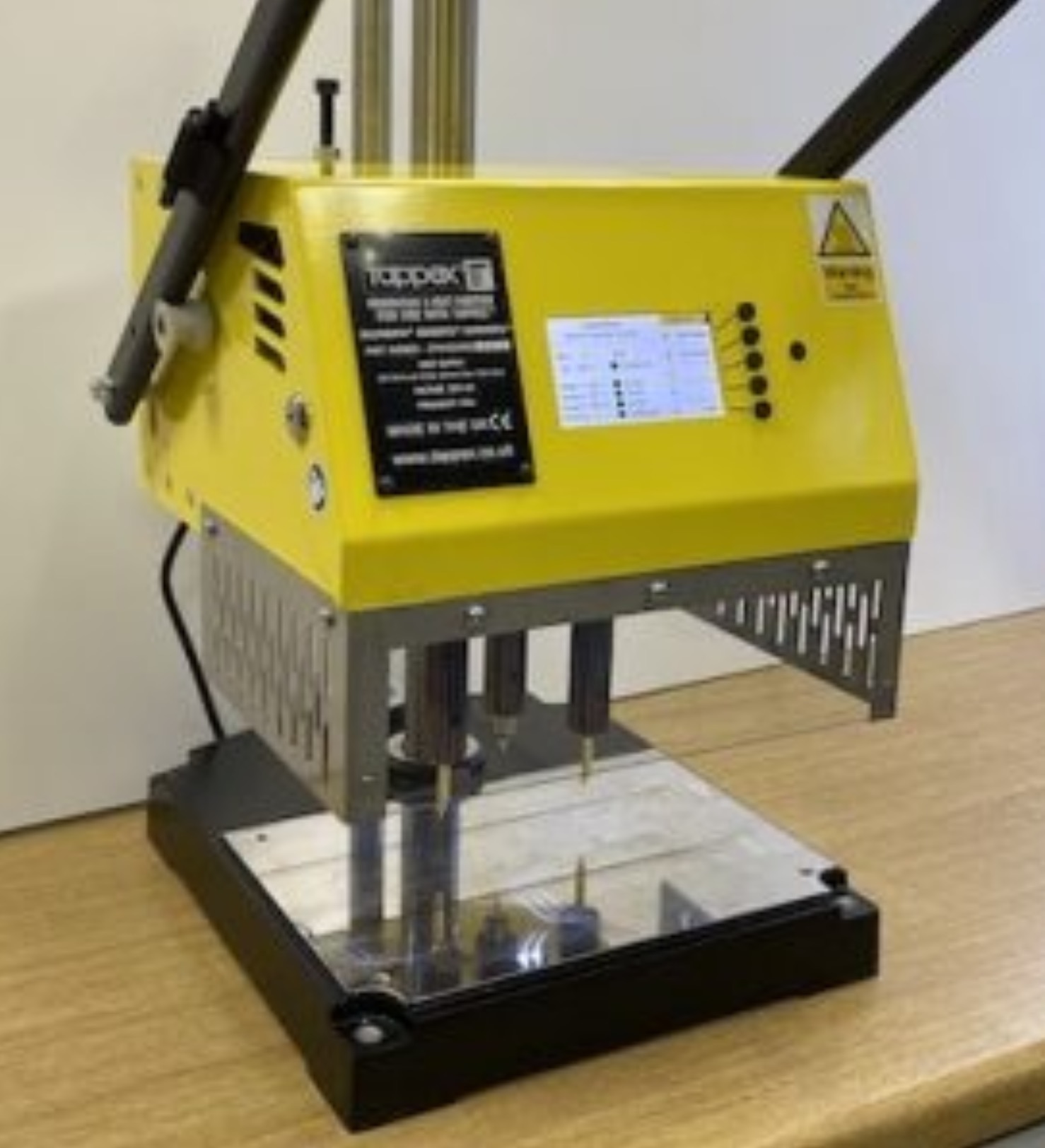
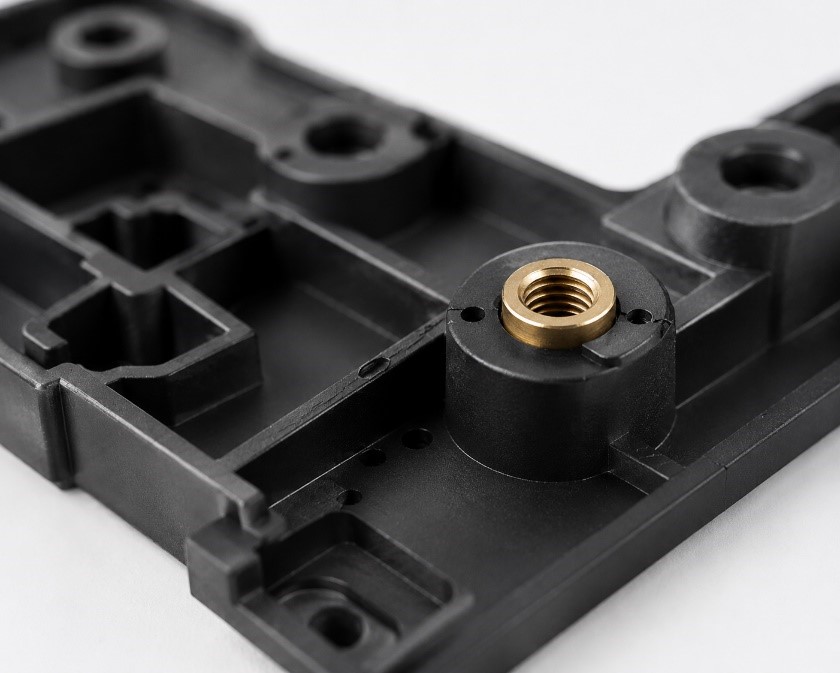
LCPE also offer heat staking which is the heating of a barbed metal insert (usually threaded) to a specific temperature and pressed into the body of a component using our heat staking machine. This is proving an ever-popular solution to plastic components that require stronger threads in them increasing pull out performance of threaded plastic threaded parts.
Heat staking is a controlled assembly method used to install metal inserts into plastic components. At LCPE, this process creates strong threaded fixing points that improve product durability, assembly performance, and long-term reliability.
The method is particularly effective where plastic parts need to withstand repeated fastening, servicing, or maintenance. Instead of relying on threads formed directly in plastic, heat staking embeds a metal insert into the component, creating a more robust connection with improved resistance to wear and pull-out forces.
LCPE provides heat staking as part of its wider precision engineering and component assembly capability, alongside CNC machining, inspection, laser etching, and manufacturing support. By managing temperature, pressure, and insertion depth carefully, LCPE achieves accurate, repeatable results for both prototype work and ongoing production requirements.
How the Heat Staking Process Works
The process begins by positioning a metal insert into a pre-formed or machined hole within the plastic part. A heated staking tool is then applied to the insert, allowing the surrounding material to soften in a controlled way.
Once the insert reaches the correct depth, the tool is removed, and the plastic cools around the metal feature. This forms a secure mechanical bond without the need for adhesives, secondary fasteners, or additional fixing methods.
Correct process control is essential. LCPE applies careful setup and inspection to help ensure each insert is seated accurately and performs as intended within the final assembly.
Benefits of Heat Staking
Heat staking provides an efficient solution for manufacturers that need dependable threaded fastening points in plastic components.
Key Benefits Include
- Stronger threads than plastic-only alternatives
- Improved pull-out and torque resistance
- Secure insert retention
- Reduced risk of cracking or component damage
- Consistent positioning across multiple parts
- Clean, professional finished appearance
- Suitable for prototype, small-batch, and repeat production work
These advantages make the process well-suited to products that require dependable fixing points while maintaining a neat and compact design.
Applications Across Industry
Heat staking is used across a wide range of sectors where plastic parts must be joined securely to metal hardware or other assemblies. Common examples include electronic housings, control panels, enclosures, instrumentation equipment, automotive parts, aerospace interiors, industrial products, and specialist engineered components.
The process is valuable where products need to be assembled, opened, repaired, or serviced during their working life. Metal inserts provide a more durable fixing point, helping reduce thread wear and improve product performance over time.
Why Choose LCPE for Heat Staking?
LCPE combines heat staking with CNC milling, CNC turning, laser etching, inspection, and assembly support, giving customers a practical single-source manufacturing option. This helps reduce supplier complexity and supports consistent quality from component manufacture through to final assembly.
As an AS9100-accredited precision engineering company, LCPE understands the importance of process control, repeatability, and careful handling of customer components. Each project is approached with the attention to detail required for demanding engineering applications.
Whether you require threaded insert installation for prototype development, low-volume manufacture, or repeat production programmes, LCPE can support your project with a reliable heat staking service designed to improve product strength, assembly efficiency, and long-term performance.