
The 5-Axis Advantage: Moving Beyond Traditional Limitations
Traditional 3-axis machining remains effective for many applications, but it becomes restrictive when working with complex geometries. Parts that require multiple orientations often need to be repositioned several times, increasing the risk of alignment errors and extending production time.
LCPE’s 5-axis machining removes these limitations. By allowing simultaneous movement across five axes, components can be machined on all sides in a single setup.
For customers in aerospace, medical, and motorsport sectors, this means:
- Greater accuracy across complex geometries
- Reduced risk of misalignment
- Faster production cycles
Single-setup machining is particularly valuable where tolerances are measured in microns. It also reduces handling, which helps maintain cleanliness, which is an important factor in medical and semiconductor applications.
Precision Engineering That Meets Industry Standards
Different industries place very specific demands on component performance. Aerospace parts must withstand repeated stress cycles, defence components must operate reliably in extreme conditions, and medical devices must meet strict regulatory and biocompatibility requirements.
LCPE operates within a controlled environment to maintain tight tolerances of ±0.005mm or better. This level of consistency is critical for high-performance applications.
Our processes are built around:
- Full traceability and documentation
- In-process and final inspection
- Compliance with standards such as AS9100 and ISO requirements
This structured approach gives procurement and engineering teams confidence in both quality and supply reliability.
Material Capability: Supporting Advanced Engineering Applications
Modern engineering projects often involve a wide range of materials, each with unique machining challenges.
LCPE works with:
- Aluminium and stainless steel
- Titanium and Inconel
- High-performance polymers such as PEEK
- Specialist alloys including Hastelloy
Each material requires a tailored machining strategy. For example:
- Heat-sensitive materials are managed to prevent deformation
- Hard alloys are machined using strategies that extend tool life and maintain finish quality
For customers managing multi-material assemblies, this capability reduces the need for multiple suppliers and simplifies the supply chain.
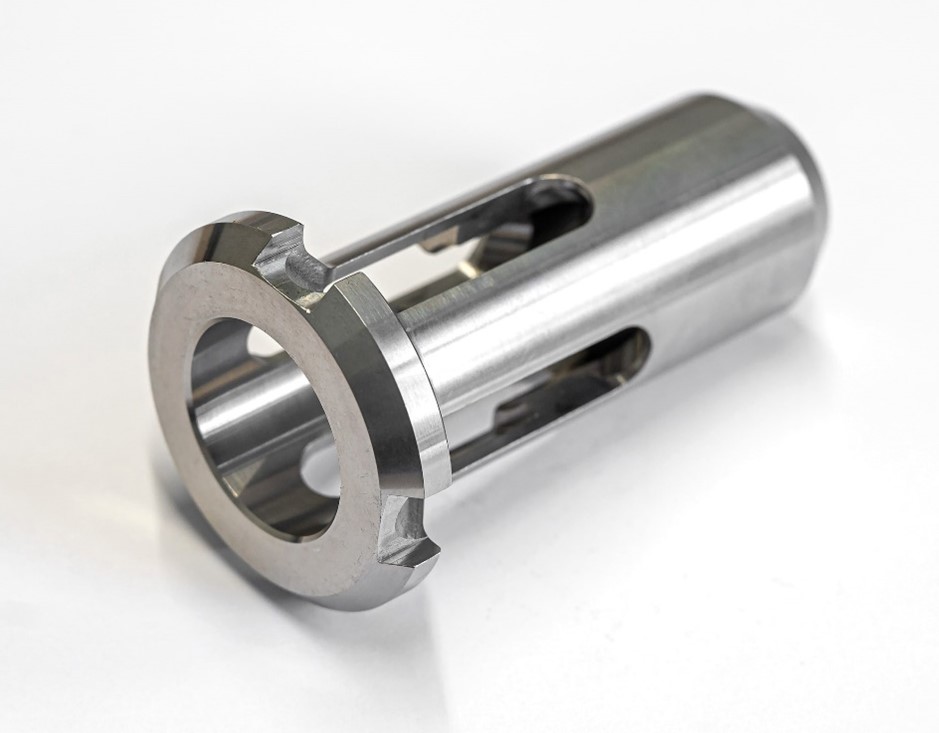
Complex Geometries Made Practical
Design engineers are now able to create highly complex components with features such as undercuts, compound angles, and freeform surfaces. The challenge is finding a manufacturing partner that can produce these parts efficiently and accurately.
LCPE’s CNC machining capability makes this possible.
Components that would traditionally require multiple setups can now be produced in a single operation. This ensures:
- Consistent dimensional relationships between features
- Reduced variation between batches
- Lower risk of part damage
For example, an aerospace bracket with multiple angled features and lightweighting pockets can be machined in one cycle instead of several, improving both accuracy and lead time.
Surface Finish: Performance and Quality Combined
Surface finish plays a critical role in both performance and durability. In some applications, it affects fatigue life or sealing performance. In others, it also contributes to the final appearance.
5-axis machining allows tools to maintain the correct angle to the surface at all times. This results in:
- More consistent finishes
- Reduced need for secondary operations
- Improved functional performance
This is especially important for:
- Sealing surfaces in fluid systems
- Medical implants requiring specific surface textures
- Components where friction and wear must be controlled
Reducing Lead Times Without Compromising Quality
Speed is often a key factor in modern manufacturing, particularly in sectors such as motorsport, aerospace development, and defence.
By machining parts in a single setup, 5-axis technology significantly reduces production time. Components that may take days using traditional methods can often be completed much faster.
Additional benefits include:
- Faster prototyping and iteration
- Reduced administrative burden from managing multiple suppliers
- Improved responsiveness to design changes
For engineering teams working to tight deadlines, this flexibility is essential.
Cost Efficiency: Looking Beyond Unit Price
The true cost of a component goes beyond the initial quotation. Factors such as quality, reliability, and delivery performance all contribute to overall value.
LCPE’s 5-axis machining reduces total cost through:
- Fewer setups and reduced labour time
- Lower risk of scrap and rework
- Elimination of complex fixturing
- Ability to machine complete parts in one operation
For complex components, this can also remove the need for assembly, improving both strength and long-term reliability.
Quality Assurance for High-Consequence Applications
For critical industries, verification is just as important as manufacturing capability.
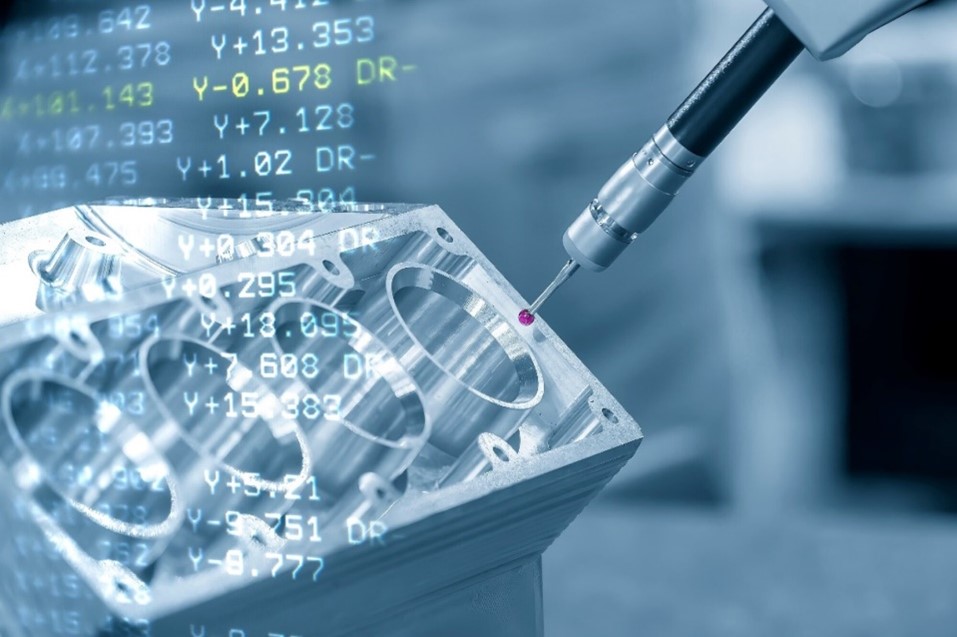
LCPE integrates quality control throughout the production process, including:
- In-process inspection
- Coordinate measuring machine (CMM) verification
- Surface finish analysis
- Material certification and traceability
This ensures that components meet specification before they reach final inspection, reducing risk and avoiding costly delays.
Need Support with a Complex Component?
If you are working with a challenging design, tight tolerances, or advanced materials, LCPE can help.
Our 5-axis machining capability is designed to support high-specification industries where accuracy, reliability, and consistency are essential.
Get in touch to discuss your requirements or browse our website to learn more about how we support precision manufacturing across aerospace, defence, medical, and advanced engineering sectors.
Frequently Asked Questions (FAQs)
What is 5-axis machining and how does it differ from 3-axis machining?
5-axis machining allows simultaneous movement across five axes, enabling complex parts to be machined in a single setup. Unlike 3-axis machining, it eliminates the need for multiple repositioning steps, improving accuracy and reducing production time.
What are the key benefits of 5-axis machining for complex components?
The main benefits include higher precision, reduced setup time, improved surface finish, and the ability to machine intricate geometries in one operation. This is particularly valuable for aerospace, medical, and defence applications.
How accurate is LCPE’s 5-axis machining capability?
LCPE maintains tight tolerances of ±0.005mm or better, supported by controlled processes, in-process inspection, and CMM verification to ensure consistency across production runs.
What materials can be machined using 5-axis technology?
LCPE machines a wide range of materials including aluminium, stainless steel, titanium, Inconel, PEEK, and specialist alloys such as Hastelloy. Each material is handled using optimised machining strategies.
Is 5-axis machining suitable for low-volume or prototype work?
Yes. 5-axis machining is highly effective for prototypes and small-batch production, as it reduces setup time and allows rapid iteration without compromising precision.
How does 5-axis machining reduce lead times?
By completing complex parts in a single setup, 5-axis machining removes multiple operations and reduces handling time. This leads to faster production cycles and quicker delivery.
Does 5-axis machining reduce overall manufacturing costs?
While machine rates may be higher, total cost is often lower due to fewer setups, reduced labour, less scrap, and elimination of secondary operations or assembly.
What industries benefit most from 5-axis machining?
Industries such as aerospace, defence, medical, motorsport, and advanced energy benefit most, where complex geometries, tight tolerances, and high reliability are critical.
How does LCPE ensure quality and traceability?
LCPE operates with full traceability, material certification, and rigorous inspection processes, including in-process checks and final CMM validation, aligned with AS9100 and ISO standards.
When should I choose 5-axis machining over traditional methods?
5-axis machining is the preferred choice when components involve complex geometries, tight tolerances, multi-sided features, or when reducing lead time and improving accuracy are priorities.


